The Power of Touch: Why Massage and Bodywork Reach Deeper Than Muscles
I have been working with hands for 25 years now. Myofascial Energetic Release (MER), Lomi Lomi Nui, deep tissue work, craniosacral touch. Thousands of bodies on my table, in Tallinn, in Poland, in India, in many training rooms around the world. And if you ask me what I have learned in all these years, the answer is very simple: touch is not a technique. Touch is a language. The oldest one we have.
We are born into touch
Before we have words, before we can even see clearly, we know the world through skin. A newborn baby does not survive on milk alone. It needs to be held, carried, rocked, felt. The mother's touch tells the small nervous system: you are safe, you are not alone, you can rest.
Research confirms what every mother knows in her body. Studies on premature babies in incubators showed that those who received regular, gentle skin-to-skin contact (often called "kangaroo care") did better – they slept better, gained weight more easily and had steadier heart rhythms than babies who were left without that contact. Touch is not a luxury. It is food for the nervous system.
Touch does not stop being important when we grow up
Somewhere along the way many of us forget this. We become adults, we get busy, we live behind screens. Here in the north, with long dark winters, some people in Estonia can go weeks without a real, caring touch. We hug a little, we shake hands, and that is it.
But the body still remembers what it needs. When touch is missing, the nervous system stays on guard. Shoulders lift, the jaw tightens, the breath becomes shallow. Over time this becomes chronic tension, back pain, neck pain, poor sleep. We call it stress, but often it is simply a body that has not felt safe for a long time.
What happens in a bodywork session
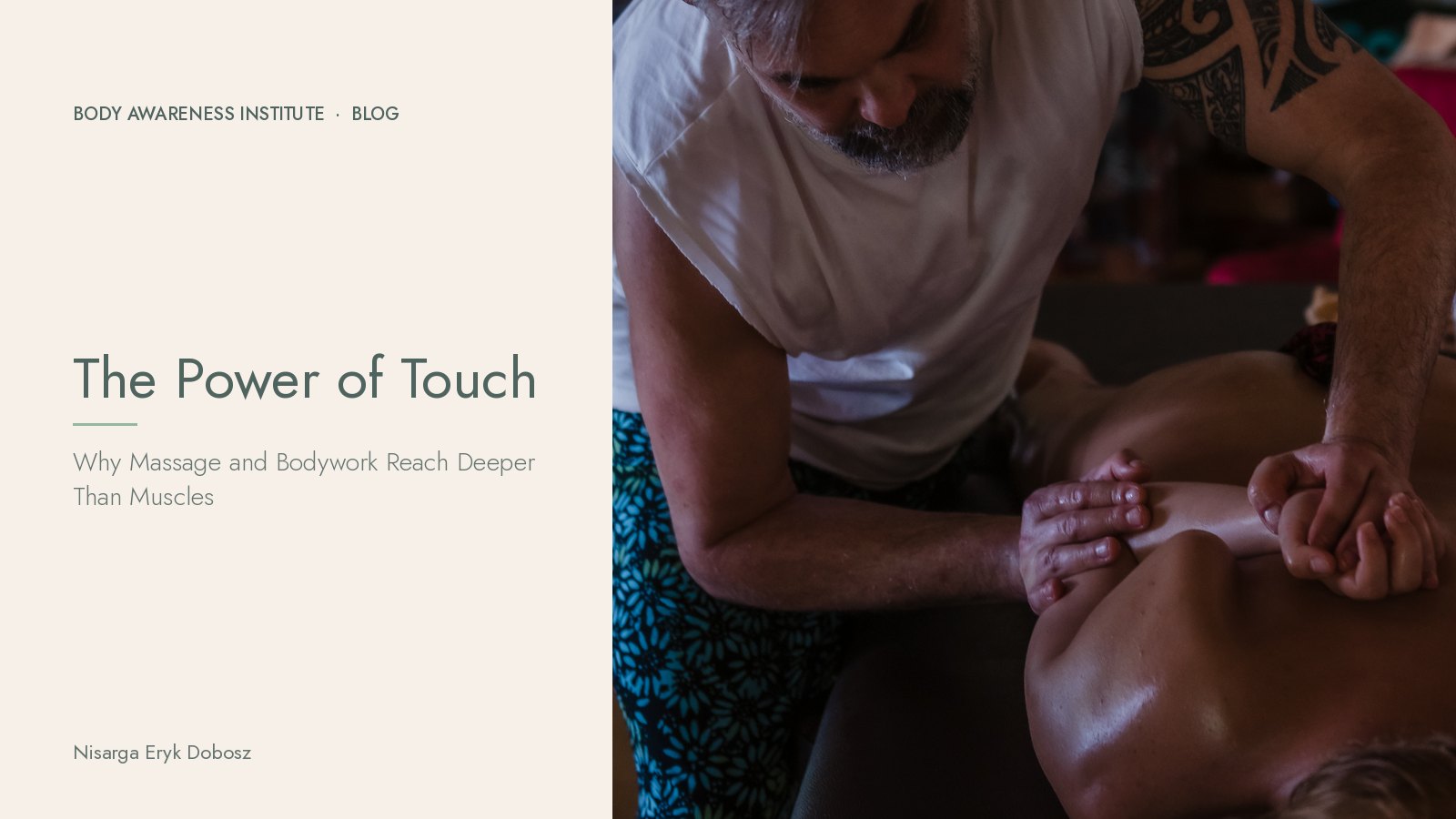
A good massage or bodywork session does much more than "fix muscles". When I work with MER, I am listening to the fascia – the connective tissue (in Estonian sidekude or fastsia) that wraps every muscle, organ and nerve. I go slowly, I wait, I follow where the tissue wants to go. There is no forcing.
When touch is slow and present, the nervous system begins to change state. The heart rate slows. The breath drops deeper into the belly. The body moves out of fight-or-flight and into the state of rest and repair. From this place, things that were held for a long time can let go.
And sometimes it is not only physical. It is very common that during a session emotions come up. A sadness without a story. Tears. Sometimes laughter, sometimes anger, sometimes a memory from long ago. I always tell my clients: this is welcome. Nothing is wrong with you. The body is simply using the safety of the moment to release what it was carrying. In trauma-informed bodywork we do not push this, and we do not dig for it. We let it come in its own time, and we stay present.
Touch changes how we relate to others
Something beautiful happens after people receive regular, caring touch. They become softer – not weaker, softer. More patient with their partners, with their children, with themselves. When we feel peace inside, it is easier to feel empathy for others. It is as if touch opens a door to compassion that words alone cannot open.
I see this in our trainings too. When students learn to give MER or Lomi Lomi, they first have to learn to receive. And in receiving, many of them meet, maybe for the first time, the feeling of being met without judgement.
Real touch in a digital world
We spend so much of our lives in virtual contact. Messages, video calls, likes. It is useful, I use it too. But the nervous system cannot be regulated through a screen in the same way. The real magic happens in genuine human presence: warm hands, a slow breath, someone who is fully with you.
This is why I believe bodywork and massage are becoming more important, not less. Not as a spa treat, but as a way to come back into the body and remember what safety feels like.
How to choose a practitioner
If you are looking for massage or bodywork in Tallinn or anywhere in Estonia, here are a few things I would look for:
- Slowness and listening. A good practitioner asks how you feel and adjusts pressure to your body, not to a routine.
- Trauma awareness. They should know that emotions may come up and be able to hold that calmly.
- Consent. You are always allowed to say stop, slower, less, or more.
- Training and experience. Methods like MER (Myofascial Energetic Release) are taught in structured trainings – ask where they studied.
And remember: bodywork supports your wellbeing, but it does not replace medical care. If you have acute or unexplained pain, check with your doctor first.
Touch as an expression of the heart
After all these years, what I try to bring to every session is not only skill. It is presence, respect and a kind of unconditional care. When the hands are guided by the heart, the client feels it immediately. The body knows the difference between being handled and being met.
If you have never experienced this kind of touch, I warmly invite you to try. Book a session, join a workshop, or come to one of our MER trainings at the Body Awareness Institute in Estonia. Let your body remember what it already knows.
Go deeper with us
Explore the Biodynamic Breathwork & Trauma Release (BBTRS®) training and the Myofascial Energetic Release (MER®) training, see upcoming dates in Tallinn and Viljandi County in the calendar, or get our free ebook “The Issue Lives in the Tissue”.
Nisarga Eryk Dobosz is a bodyworker and trainer (BBTRS®, MER®, BCST, Lomi Lomi) and founder of the Body Awareness Institute. This article is for education and self-care. It is not medical advice and does not replace care from a doctor or therapist.