Why Trauma Work Matters: Healing the Nervous System, Not Just the Story
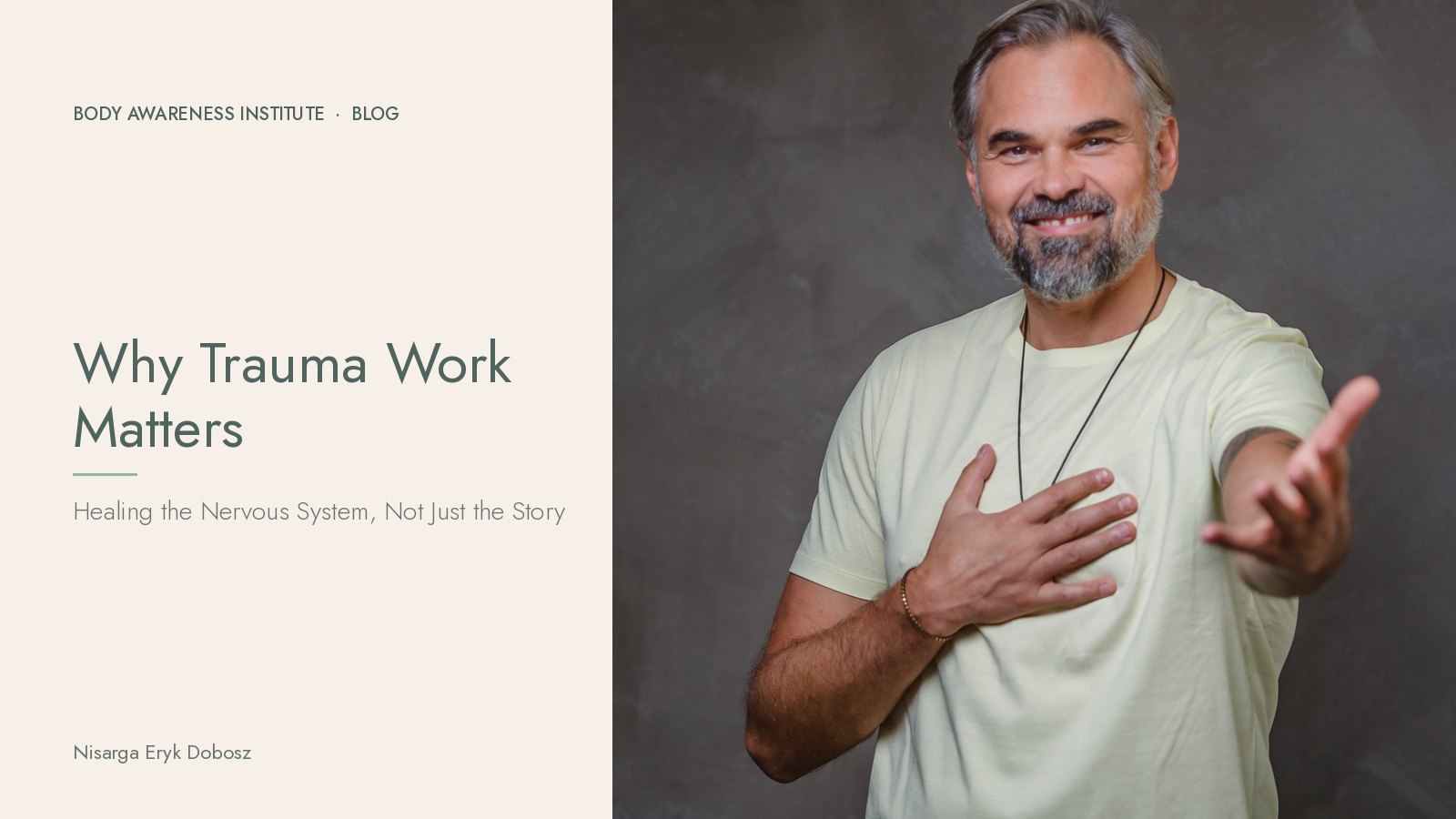
I have been a bodyworker for 25 years and a Biodynamic Breathwork facilitator since 2009, and I work with trauma through these as well as Biodynamic Craniosacral Therapy and Compassionate Inquiry. Over this time I have watched trauma work grow from something on the edge of the therapy world into one of its foundations. And I have seen, many times, how it helps people leave old pain behind and step into a brighter tomorrow.
From the margins to the centre
It was not always like this. For a long time trauma was barely spoken about in therapy, and the role of the body was mostly ignored. That changed thanks to pioneers like Peter Levine (Somatic Experiencing), Bessel van der Kolk (The Body Keeps the Score), Stephen Porges (Polyvagal Theory) and Gabor Maté (Compassionate Inquiry, The Myth of Normal). Their work showed clearly that trauma is not only what happened to us – it is what happens inside us, in the nervous system and the body, as a result.
Today trauma-informed approaches are respected across psychology, medicine and bodywork. Here in Estonia, too, more and more therapists, coaches and bodyworkers are learning to work in a trauma-informed way.
A great responsibility
Working with trauma is a privilege and a responsibility. When someone lets you near the most sensitive places in their life, you need patience, sensitivity and a deep understanding of how mind and body influence each other. There is no place for pushing, for a fixed agenda, or for the ego of the therapist.
What trauma work really aims for
At its heart, trauma work is about gently regulating the nervous system and slowly widening the client's window of tolerance – the range in which they can feel life without shutting down or being overwhelmed.
Polyvagal Theory offers one beautiful map, though researchers still debate it. According to this theory, when we feel safe and connected, the ventral vagal part of the parasympathetic nervous system is active. This is where we find peace, contentment, love, compassion and the ability to connect with others. When we guide clients toward this state again and again, the body remembers how to regulate itself. Healing then comes from inside, not from the therapist.
Every person is different
Over the years I have learned that trauma work is never one-size-fits-all. Each person has their own personality, their own gifts and their own shadows. Each has a unique story and a unique nervous system. Part of the work is understanding this story, how past events still live in the present, and helping the person find their own resolution.
Readiness and safety
One of the most important skills is to sense when a client is ready – and when not. Opening old wounds too early can do harm. So the process must be safe, gentle and adapted to each person. Sometimes the most healing session is one where we only build resources: breath, grounding, a feeling of being supported.
When the system is ready, people find the courage to feel and express emotions that were buried for years. Together we can complete the circle of what happened – letting the body finish the fight, flight or freeze that was interrupted, releasing held emotions, and seeing the old experience in a new light. People leave with more resilience and a deeper sense of who they are.
Courage on both sides
Trauma healing is not for the faint-hearted. It asks for courage and surrender – from the client and also from the therapist. I am always humbled by the trust people give me as they meet the forgotten messages their body and mind have carried for so long.
Body-based trauma work and talk therapy
Body-based approaches like breathwork, craniosacral therapy and MER bodywork work beautifully together with talk therapy. Words help us understand; the body helps us actually feel safe again. If you are living with serious trauma symptoms, PTSD, or a mental health condition, please also work with a qualified psychotherapist or doctor. Good trauma work is a team effort.
The first step
To heal, all we need is to take a first step – and then keep committing to our growth and to our feelings. When we meet our trauma with courage and openness, transformation begins.
And please remember: you are not alone. Look around – there is always someone ready to walk beside you, to support and guide you. Together we can unlock the healing that lies within, and create a future with more peace and wholeness.
If you are looking for trauma-informed breathwork or bodywork in Tallinn, or want to learn to work this way yourself, the Body Awareness Institute offers sessions and professional trainings in BBTRS breathwork and MER bodywork in Estonia.
Go deeper with us
Explore the Biodynamic Breathwork & Trauma Release (BBTRS®) training and the Myofascial Energetic Release (MER®) training, see upcoming dates in Tallinn and Viljandi County in the calendar, or get our free ebook “The Issue Lives in the Tissue”.
Nisarga Eryk Dobosz is a bodyworker and trainer (BBTRS®, MER®, BCST, Lomi Lomi) and founder of the Body Awareness Institute. This article is for education and self-care. It is not medical advice and does not replace care from a doctor or therapist.